Locate the robot
Use optical tracking to measure position within the working volume and provide feedback for guidance.
Bring high-accuracy positioning to large-volume aerospace assembly with TPR’s Adaptive Robot Control Plus (ARC+).
Optical metrology, digital twin technology and adaptive control work together to guide the robot to the part — supporting precise drilling and countersinking.
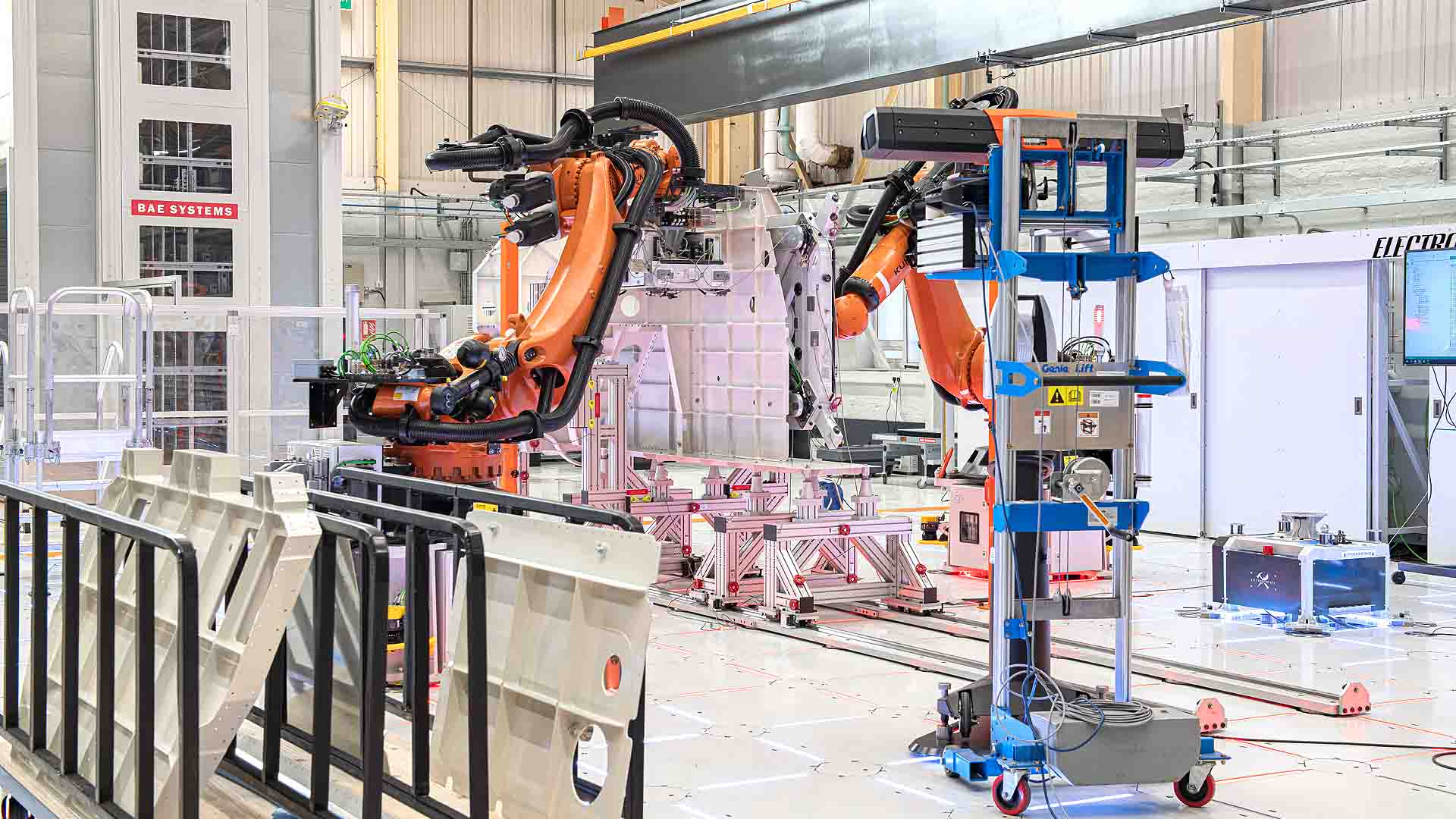
Figures from TPR’s published guidance system. Achievable performance depends on the application, equipment and operating conditions; confirm requirements with TPR.
Aerospace assembly needs the tool to reach the right position on the component. TPR’s metrology-based guidance connects the programmed operation with measured position, helping account for the robot’s behaviour during the process.
Use optical tracking to measure position within the working volume and provide feedback for guidance.
ARC+ combines metrology, digital twin technology and machine learning to take robot compliance into account during the operation.
Bring the tool into position for precise, repeatable drilling and countersinking against your application’s requirements.
ARC+ sits at the heart of TPR’s robot guidance approach. It combines measured feedback with a digital representation of the system to support accurate positioning during manufacture.
The technology accounts for robot compliance — how the robot deflects during the process — rather than relying on the programmed position alone.
Establish the measured position.
Connect measurement with the robot and process model.
Use positioning feedback to support the manufacturing cycle.
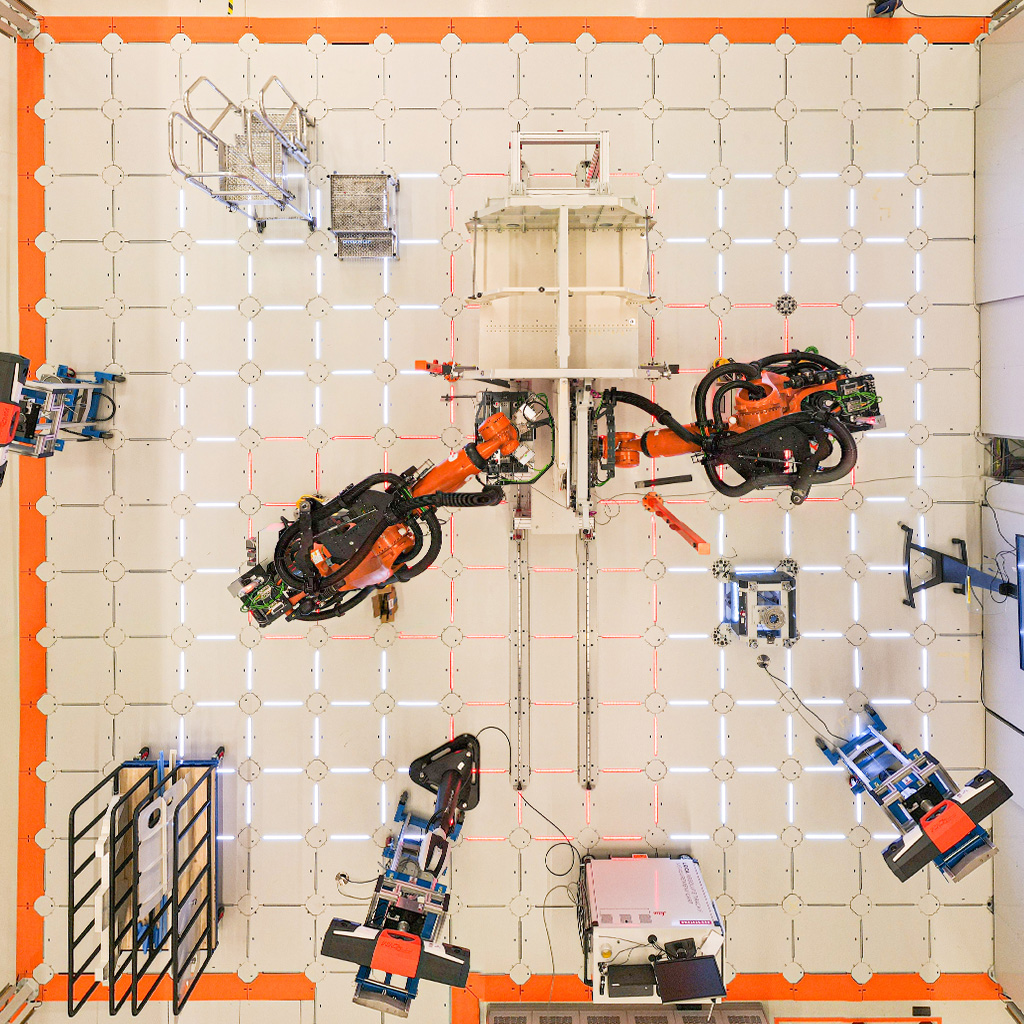
Smaller working volumes can use a single camera. Multi-camera ARC configurations extend coverage for larger assemblies.
TPR’s published setup supports up to four cameras, with a stated measurement volume of up to 16.6 m³ per camera. Camera placement and visibility need to suit the part, tooling and robot movement.
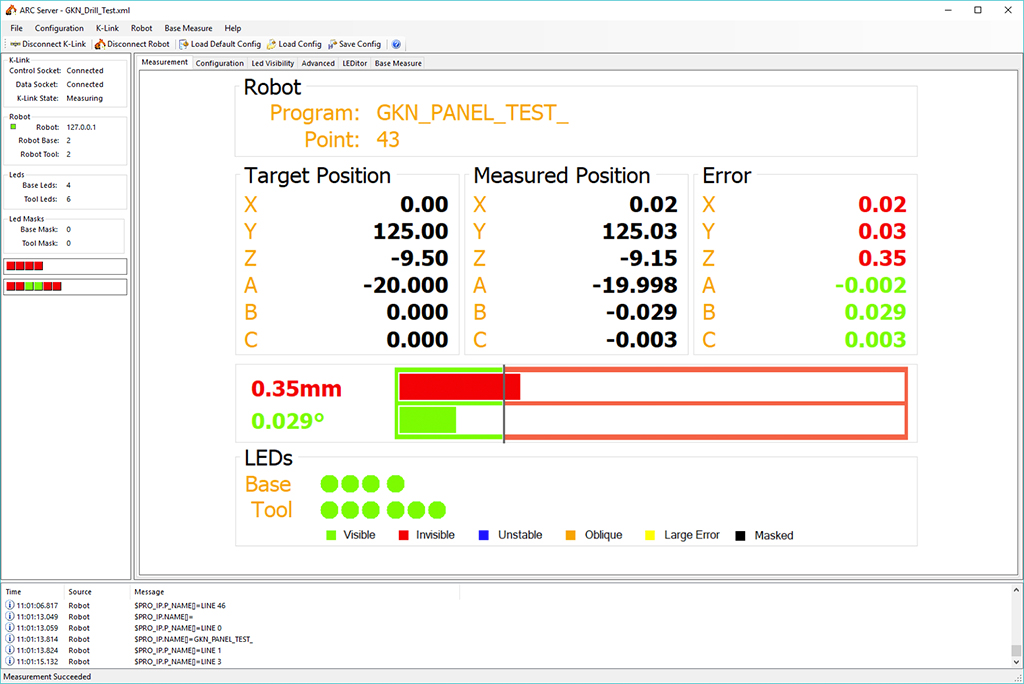
The ARC interface presents target position, measured position and the remaining error so operators can see how the robot relates to its target.
In TPR’s published drilling sequence, the interface turns green once the position is reached and the drill cycle begins.
A starting point for your engineering review, based on TPR’s published robot guidance configuration.
| Guidance technology | Adaptive Robot Control Plus (ARC+), combining optical metrology, digital twin technology and machine learning. |
|---|---|
| Published positioning capability | Absolute position: ±0.1 mm. Guidance to the true surface: ±40 μm. Application performance to be confirmed with TPR. |
| System components | Metrology PC, software and hardware, including ARC robot guidance. |
| Optical tracking | Creaform C-Track Elite. Published volume: up to 16.6 m³ per camera; maximum four cameras per setup. |
| Published tracker figures | Volumetric accuracy: 0.064 mm at 95% confidence. Published 3-sigma accuracy: 0.1 mm. |
| Connectivity | TCP/IP, OPC-UA, Profinet and EtherCAT. |
| Digital manufacturing | Smart templates for Siemens PLM integration, particularly Process Simulate robot simulation. |
| Robot & control options | Published options include FANUC robots/cobots, KUKA, ABB and Siemens 840D. Specific compatibility to be confirmed for your application. |
| Tool change | Option for full robotic tool change. |
| Support services | Virtual manufacturing support, offline robot programming, training, maintenance and calibration. |
Tracker specifications and complete-system positioning performance describe different measurements. Confirm the required tolerances, working volume, loading and validation method with TPR when defining your application.
Connect high-accuracy guidance with specialist drilling tooling for aerospace assembly.
Bring geometric measurement and reporting into the build, from fixture checks to final validation.
ARC+ combines optical measurement with digital twin technology and adaptive control to guide robot positioning. TPR’s approach accounts for robot compliance during the process to support precise drilling and countersinking.
TPR offers single-camera and multi-camera configurations. Share the part envelope, robot reach, fixture layout and access constraints so the working volume and camera arrangement can be assessed.
The published options include several industrial robot and control platforms. TPR will need your robot model, controller, tooling and interfaces to assess compatibility and the integration required.
Start with the operation, component size, target tolerances, robot and controller, tooling loads and cycle-time requirements. TPR can then help define a useful demonstration and how performance should be validated.
Tell us what your robot needs to do, the working volume and the accuracy you need. We’ll help you explore the guidance system and integration requirements.
For an initial enquiry, a short description is enough.