
Guide the robot
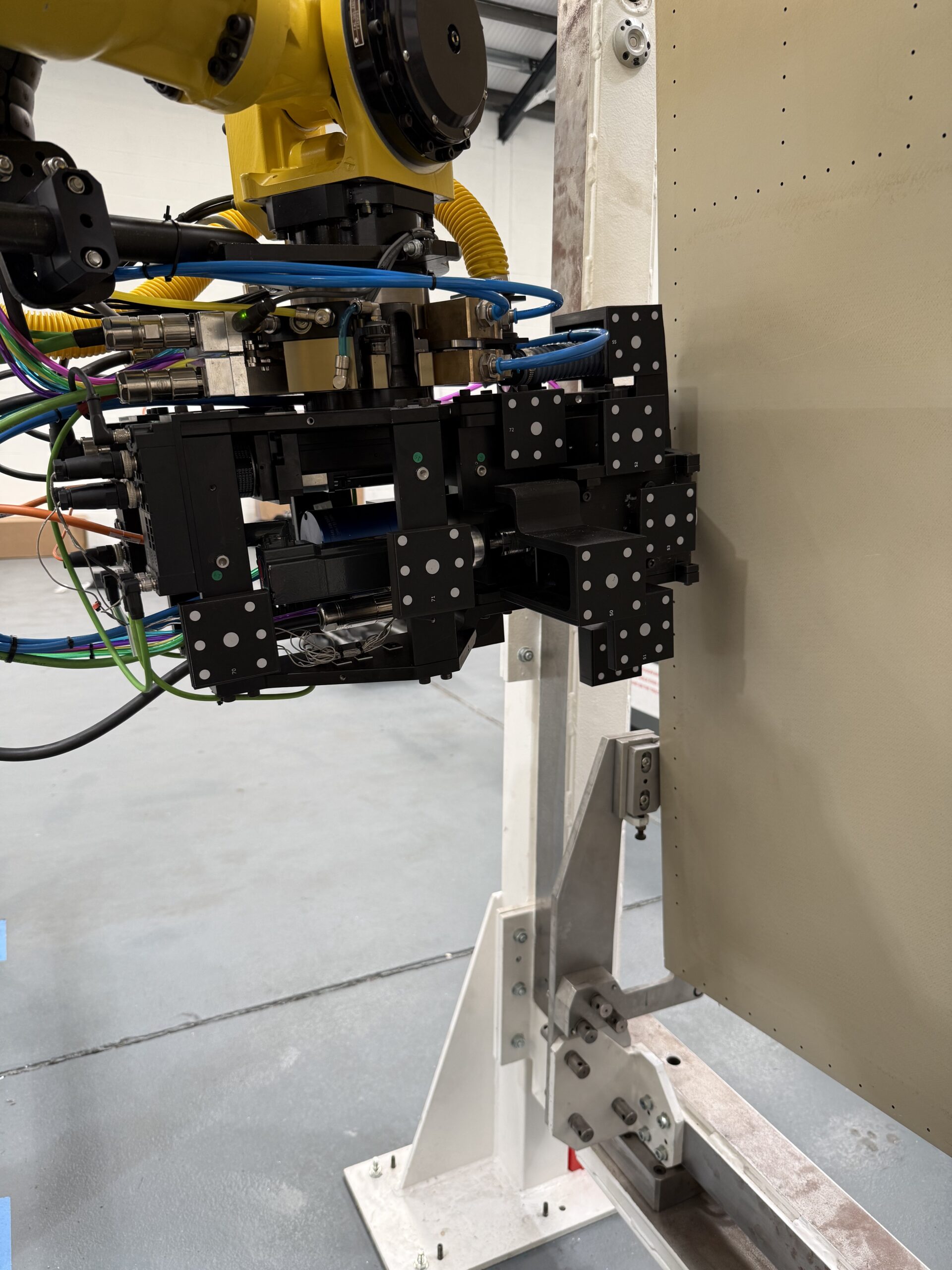
Optical metrology and ARC+ robot guidance with machine learning support accurate positioning before drilling.
Bring guided positioning, controlled clamp-up and specialist drilling tooling together for small aerostructure assembly.
TPR combines lightweight end effectors with optical metrology and offline programming to help you automate demanding drilling operations.
Figures from TPR’s published product specification. Performance and suitability depend on the application and configuration; discuss your materials, geometry and acceptance criteria with our team.
Tight tolerances, restricted access and repetitive hole patterns make aerostructure drilling a demanding automation task. TPR connects robot guidance, tooling and process control so that the physical operation follows the manufacturing plan.
Optical metrology and ARC+ robot guidance with machine learning support accurate positioning before drilling.
Servo-controlled clamp-up with live force feedback supports the drilling and countersinking process.
Combine offline programming, robot control and statistical process reporting within your manufacturing workflow.
Explore how TPR brings its robotic drilling technology into aerospace assembly. Watch the existing demonstration, then discuss how the approach could fit your parts and production requirements.
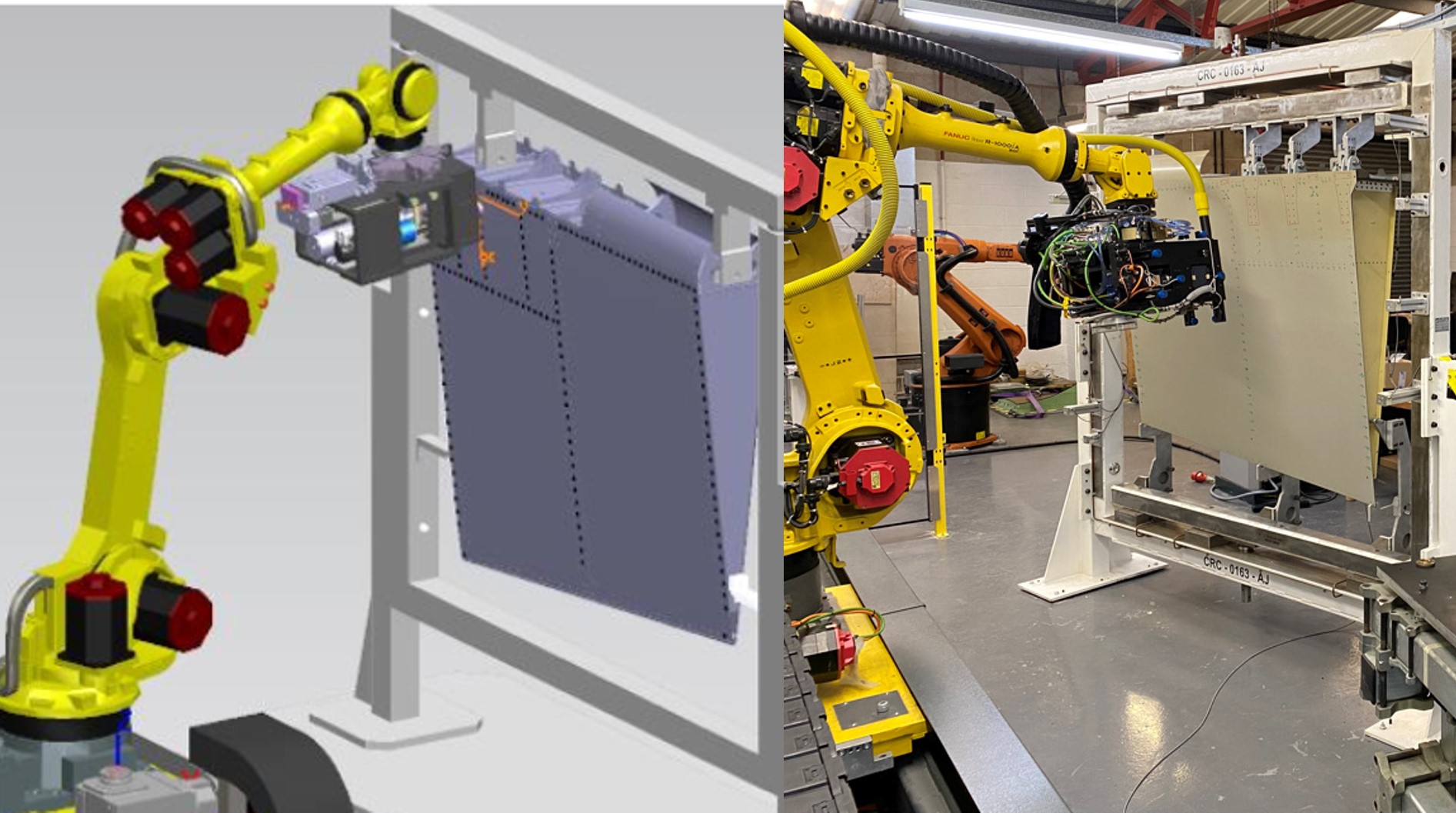
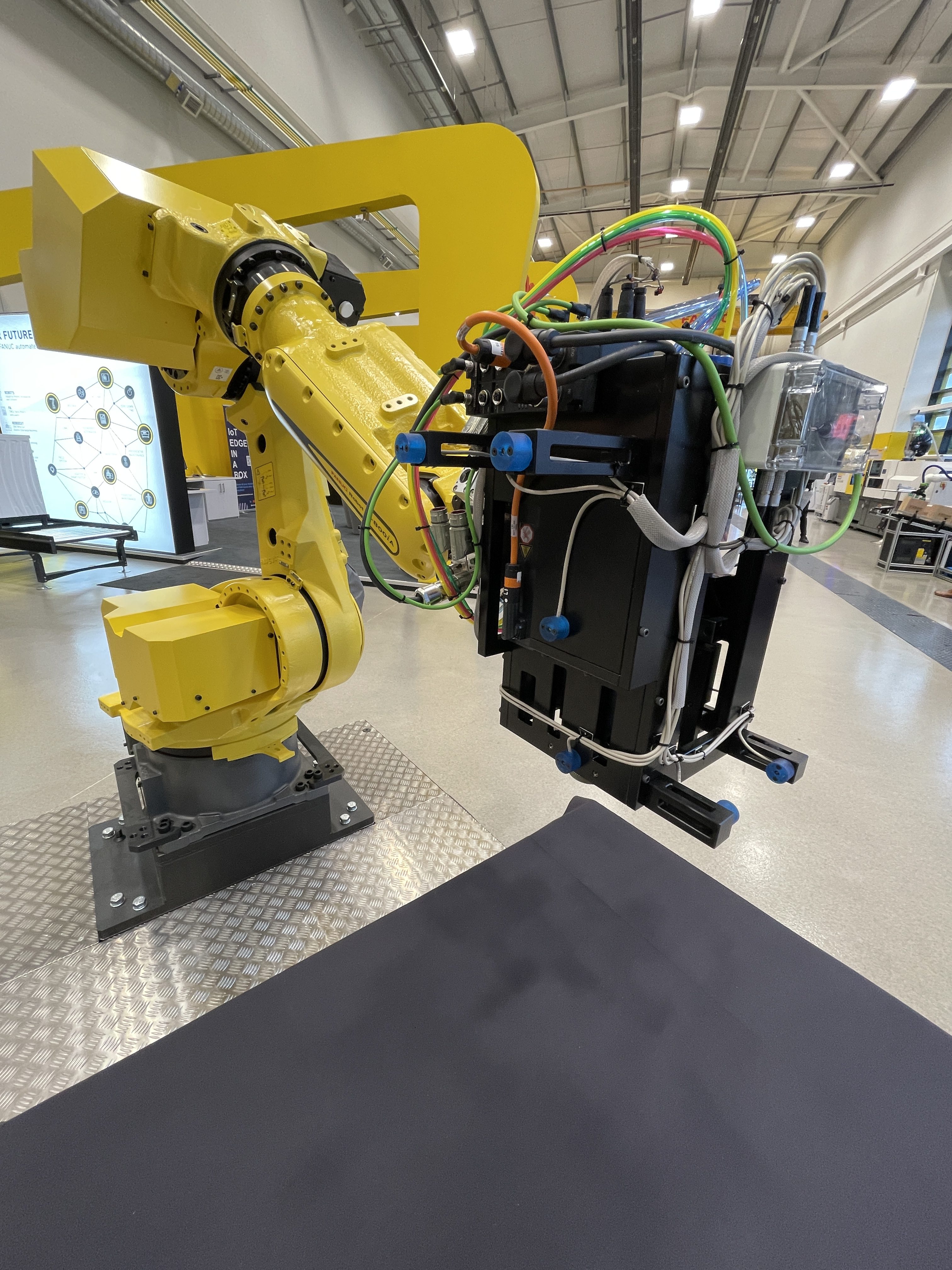
The published configuration supports holes up to 10 mm, with larger spindle options available for discussion. Lightweight tooling and offline programming offer a practical starting point for evaluating automation around your assembly.
Share your hole sizes, material stack, access constraints, required tolerances and target cycle time. TPR can help assess the tooling, guidance and integration requirements.
Published system information, organised for your engineering review.
| Drill spindle | High-frequency, water-cooled, vector-controlled spindle with chiller unit. S6 power: 5 kW; maximum 6.6 kW for 5 seconds. |
|---|---|
| Tool interface | Automatic collet change (HSK ER16); maximum drill diameter 10 mm in the published configuration. |
| Clamp-up system | Servo controlled with live force feedback. Published patent reference: 2593501. |
| Countersink control | Published Cpk: 4.39; tolerance: ±0.04 mm. |
| Position results | Published Cpk: 2.91; mean: 0.053 mm; stated tolerance: 0.254 mm. |
| Controls | Controls cabinet with frequency controller and EtherCAT drill PLC, designed to connect to a cell PLC or directly to the robot. Third-party spindle options. |
| Guidance & reporting | Metrology PC, software and hardware; ARC+ robot guidance with machine learning; ProLink QC-CALC statistical process control reporting. |
| Optical tracker | Creaform C-Track Elite. Published volume: up to 16.6 m³ per camera, with a maximum of four cameras per setup. Published volumetric accuracy: 0.064 mm at 95% confidence. |
| Connectivity | TCP/IP, OPC-UA, Profinet and EtherCAT. |
| Digital manufacturing | Smart templates for Siemens PLM integration, particularly Process Simulate robot simulation; offline robot programming support. |
| Robot & control options | Published options include FANUC robots/cobots, KUKA, ABB and Siemens 840D. Configuration and compatibility to be confirmed for your application. |
| Additional options & services | Full robotic tool change; virtual manufacturing support; offline programming; training, maintenance and calibration services. |
These values describe the published configuration and reported results, rather than a guarantee for every installation. Confirm the measurement method, operating volume and process capability requirements with TPR when specifying a system.
TPR’s published DELTA collaboration combines robotic drilling, offline programming and robot guidance with measurement data integration. The project story describes work on small aerostructures and ¼-inch countersunk holes.
The drilling system’s published development background includes the Innovate UK ADI project, focused on automated drilling and inspection for small aerostructures.
Discuss your production requirements with TPR to evaluate the relevant configuration and evidence for your application.
The published HSK ER16 configuration supports a maximum drill diameter of 10 mm. Larger spindle configurations can be discussed with TPR against your application requirements.
The published options include FANUC, KUKA, ABB and Siemens 840D, with TCP/IP, OPC-UA, Profinet and EtherCAT connectivity. Confirm the specific controller, interfaces and tooling configuration with TPR.
TPR also offers Robotic 3D Inspection and Robot Guidance. Discuss a combined process, including robot tool-change requirements and reporting, with the team.
Useful starting information includes part geometry, material stack, hole and countersink sizes, tolerance requirements, production volumes, access constraints and your existing robot or cell controls.
Tell us about your assembly, required tolerances and production targets. We’ll help you explore the next step, including a technical discussion or demonstration.
For an initial enquiry, a short description is enough.